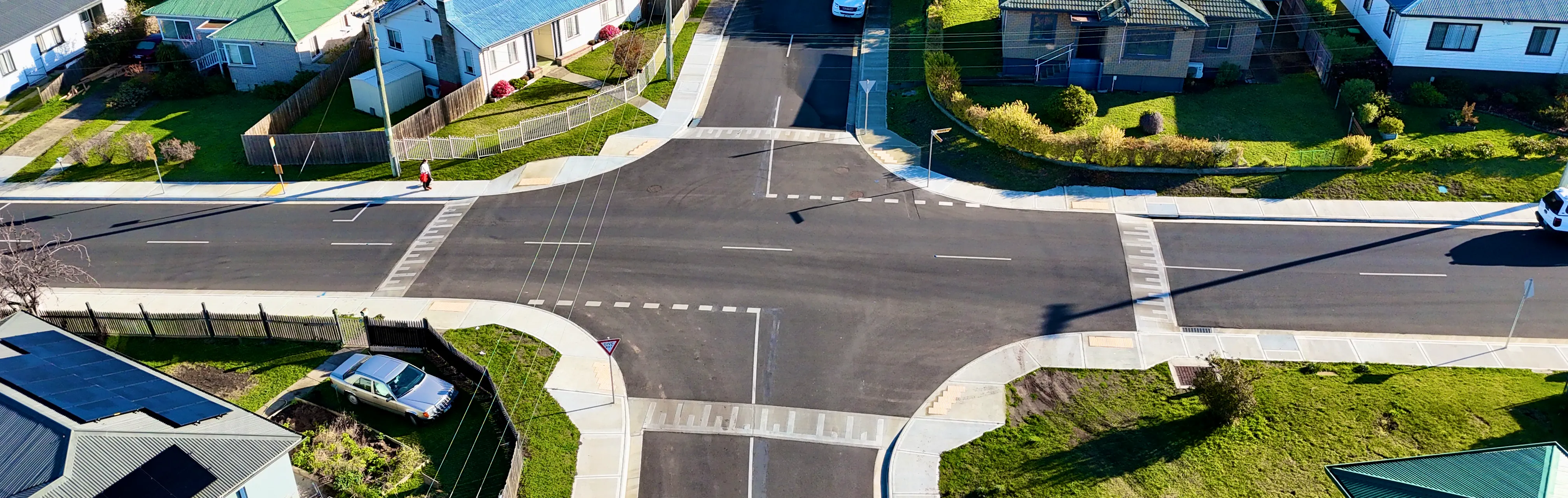
What is Traffic Calming?
Traffic calming measures are undertaken to reduce vehicles speeds and volumes, along with improving the safety of the road.
Traffic calming measures can include:
Education - Road safety campaigns and driver awareness programs.
Enforcement - Police enforcement of road rules and speeding offences.
Engineering Devices - Physical changes to the road environment, including:
- Road humps
- Roundabouts
- Pedestrian crossings
- Kerb extensions
- Traffic islands
- Bike lanes
- Line marking
- Signage
Different traffic issues require different solutions. The policy recognises that there is no one-size-fits-all approach.
Traffic Calming Policy
The proposed policy updates Council's current approach to traffic calming and provides a clear, consistent and transparent process for assessing requests for traffic calming measures across the municipality.
The proposed policy follows current industry guidance, links with Council's road, footpath and cycling plans, and sets out when Council will investigate traffic calming requests.
Glenorchy City Council is seeking community feedback on the proposed new Traffic Calming Policy. Please note that this consultation is about the proposed policy itself, not about requests for traffic calming measures in individual streets.
Why is Council Updating the Policy?
Council's existing policy has primarily focused on road humps and raised pedestrian crossings. The proposed policy:
- Recognises a wider range of traffic calming measures.
- Applies to all urban roads managed by Glenorchy City Council.
- Provides a transparent assessment and decision-making process for all concerns raised.
- Aligns with Council's road hierarchy, footpath hierarchy and Cycling Infrastructure Plan.
Proposed Assessment Criteria
Council will investigate traffic calming measure in a street if one or more of the following criteria apply:
- Vehicle speeds are more than 10% above the posted speed limit (based on the 85th percentile speed).
- Traffic volumes exceed the expected function of the road.
- The location is on key pedestrian routes such as at near a school.
- Crash data indicates traffic calming may improve safety.
- The location supports Council's Cycling Infrastructure Plan.
Meeting the criteria does not automatically result in a traffic calming device being installed. It triggers a detailed assessment to determine the most appropriate measure.
Revised Speed Threshold
The proposed policy changes the speed trigger for investigation from 10 km/h to 10% above the posted speed limit. This means that in a 50km/h zone, the 85th percentile speed (speed at which 85% of drivers travel at or below) previously needed to be above 60km/h and proposed is above 55 km/h.
This change better reflects different speed environments across the municipality and would allow more locations to be considered for detailed assessment.
How Does the Proposed Process Work?
📣
1. Request
A concern is raised by the community or through Council’s assessment of our roads. | → | 🔎
2. Initial assessment
Council checks the site against the policy criteria. | → | 📋
3. Detailed assessment
If the criteria are met, Council completes a technical assessment. | → | 🛠
4. Select treatment
Council chooses most suitable measure based on safety and strategic benefits. | → | 💰
5. Prioritise and fund
Projects are considered through budgets or external funding. |
How will projects be selected and prioritised?
Projects will be selected and prioritised based on:
- Demonstrated safety risk
- Speed compliance issues
- Exposure of vulnerable road users
- Alignment with network plans
- What can physically be undertaken
- Safety improvement of measures
- Impact on road network
- Deliverability, funding availability and constructability
Have Your Say
Council wants to hear your views on the proposed Traffic Calming Policy. Your feedback will help Council understand community priorities and inform the final policy for Council to consideration.
Share your feedback by completing the online survey or making a written submission.
The survey is open until 31st August 2026.
What is Traffic Calming?
Traffic calming measures are undertaken to reduce vehicles speeds and volumes, along with improving the safety of the road.
Traffic calming measures can include:
Education - Road safety campaigns and driver awareness programs.
Enforcement - Police enforcement of road rules and speeding offences.
Engineering Devices - Physical changes to the road environment, including:
- Road humps
- Roundabouts
- Pedestrian crossings
- Kerb extensions
- Traffic islands
- Bike lanes
- Line marking
- Signage
Different traffic issues require different solutions. The policy recognises that there is no one-size-fits-all approach.
Traffic Calming Policy
The proposed policy updates Council's current approach to traffic calming and provides a clear, consistent and transparent process for assessing requests for traffic calming measures across the municipality.
The proposed policy follows current industry guidance, links with Council's road, footpath and cycling plans, and sets out when Council will investigate traffic calming requests.
Glenorchy City Council is seeking community feedback on the proposed new Traffic Calming Policy. Please note that this consultation is about the proposed policy itself, not about requests for traffic calming measures in individual streets.
Why is Council Updating the Policy?
Council's existing policy has primarily focused on road humps and raised pedestrian crossings. The proposed policy:
- Recognises a wider range of traffic calming measures.
- Applies to all urban roads managed by Glenorchy City Council.
- Provides a transparent assessment and decision-making process for all concerns raised.
- Aligns with Council's road hierarchy, footpath hierarchy and Cycling Infrastructure Plan.
Proposed Assessment Criteria
Council will investigate traffic calming measure in a street if one or more of the following criteria apply:
- Vehicle speeds are more than 10% above the posted speed limit (based on the 85th percentile speed).
- Traffic volumes exceed the expected function of the road.
- The location is on key pedestrian routes such as at near a school.
- Crash data indicates traffic calming may improve safety.
- The location supports Council's Cycling Infrastructure Plan.
Meeting the criteria does not automatically result in a traffic calming device being installed. It triggers a detailed assessment to determine the most appropriate measure.
Revised Speed Threshold
The proposed policy changes the speed trigger for investigation from 10 km/h to 10% above the posted speed limit. This means that in a 50km/h zone, the 85th percentile speed (speed at which 85% of drivers travel at or below) previously needed to be above 60km/h and proposed is above 55 km/h.
This change better reflects different speed environments across the municipality and would allow more locations to be considered for detailed assessment.
How Does the Proposed Process Work?
📣
1. Request
A concern is raised by the community or through Council’s assessment of our roads. | → | 🔎
2. Initial assessment
Council checks the site against the policy criteria. | → | 📋
3. Detailed assessment
If the criteria are met, Council completes a technical assessment. | → | 🛠
4. Select treatment
Council chooses most suitable measure based on safety and strategic benefits. | → | 💰
5. Prioritise and fund
Projects are considered through budgets or external funding. |
How will projects be selected and prioritised?
Projects will be selected and prioritised based on:
- Demonstrated safety risk
- Speed compliance issues
- Exposure of vulnerable road users
- Alignment with network plans
- What can physically be undertaken
- Safety improvement of measures
- Impact on road network
- Deliverability, funding availability and constructability
Have Your Say
Council wants to hear your views on the proposed Traffic Calming Policy. Your feedback will help Council understand community priorities and inform the final policy for Council to consideration.
Share your feedback by completing the online survey or making a written submission.
The survey is open until 31st August 2026.